Teaching
ENV 140: Exploring the Solid Earth
Course description: This course investigates the composition, structure, and dynamics of the solid Earth. The course reviews prominent theories for the origin of matter, the accretion and differentiation of the planets, and the structure of the Earth's interior. The role of plate tectonics in driving the exchange of matter and energy between Earth systems is a central theme of the course, providing the theoretical context for understanding geological phenomena such as seismic activity, volcanism and mountain building. The course is designed to provide the necessary scientific and intellectual background for understanding a wide range of Earth phenomena, and to give students a greater appreciation for the origin and evolution of their planet.
ENV 141: Atmosphere, Ocean, and Environment
Course description: This course examines processes and features that characterize the Earth's surface. The course focuses on the major Earth systems of land (lithosphere), air (atmosphere), and water (hydrosphere) and explores how these systems evolve and interact through geologic time. Examples include studying global air circulation and its effect on weather, examining links between ocean currents and global climate, and exploring how stream processes help to shape landscape. The role of plate tectonics in driving the exchange of matter and energy between Earth's systems is also a central theme. The course is designed to provide the necessary scientific and intellectual background for understanding a wide range of Earth phenomena, and to give students a greater appreciation for the natural environment.
ENV 294: Natural Disasters
Course description: This course will provide you with a basic understanding of both geologic and atmospheric natural hazards and their influence on global society. We will discuss the general science and process that drives geologic (earthquakes, volcanoes, tsunamis) and atmospheric (hurricanes, tornadoes, floods) events and investigate the impact of natural hazards on humans at the local level and around the world.
ENV 294: Plants, People, and Society
Course description: This course takes a multidisciplinary approach to studying the relationship between plants and people. The course focuses on providing students foundational information on the growth, development, and physiology of plants and explores the connection between plants and people by looking at the use of plants as sources of food, shelter, medicinal and manufactured goods.
ENV 294: Spatial Analysis of Environmental Challenges
Course description: Environmental challenges such as climate change, pollution, urbanization, and habitat loss are inherently spatial. This course explores how Geographic Information Systems (GIS), Global Positioning Systems (GPS), and remote sensing can be used to investigate these challenges and inform environmental decision-making. Students will learn to collect, visualize, analyze, and interpret spatial data from both field-based and online sources. Through hands-on labs, readings, discussions, and a final student project, students will apply spatial analysis techniques to real-world environmental problems. Emphasis will be placed not only on the technical tools of spatial analysis, but also on understanding what spatial data can and cannot tell us about complex environmental systems.
ENV 320: Climate change
Course descriptions: This class teaches students the basic science behind climate change. Students evaluate the evidence that our climate is changing and that it is caused by humans. We also discuss our future in a changing climate and potential adaption, mitigation, and geoengineering strategies. Climate change science is changing quickly, and we will read and discuss recent papers published in the literature. The lab instruction includes field trips, data analysis, and journal article discussion.
ENV 394: Towards the Anthropocene
Course description: An examination of the fossil and geologic evidence of the history of life on Earth. This course will emphasize what the fossil records tells us about the fundamentals of evolutionary patterns, the origins and evolution of early life, mass extinctions, the history of the impact of life, and the implications of human activity on future climate change and life here on Earth.
ENV 392: Junior Seminar
Course description: A two-semester weekly seminar that prepares students for graduate education, career development, and writing a successful Senior Capstone Experience (SCE). Seminars are led by Environmental Science and Studies faculty and invited guests. Students present their SCE proposals and findings as part of the seminar. Required of all Environmental Science and Studies majors.
ENV 491: Senior Seminar
Course description: ENV 491 is part of a two-semester weekly seminar that prepares students for graduate education, career development, and writing a successful Senior Capstone Experience (SCE). Seminars are led by Environmental Science and Studies faculty and invited guests (including from the Career Center and Writing Center). Students present their SCE proposals and findings as part of the seminar. Required of all Environmental Science and Studies majors.
ENV SCE
Course description: Every environmental science and environmental studies major is required to complete a Senior Capstone Experience (SCE). Students enroll in the four-credit SCE course during their final semester, although students must begin work on their SCE during the previous semester. The SCE can take the form of a laboratory or field research project, monograph, or service learning project.
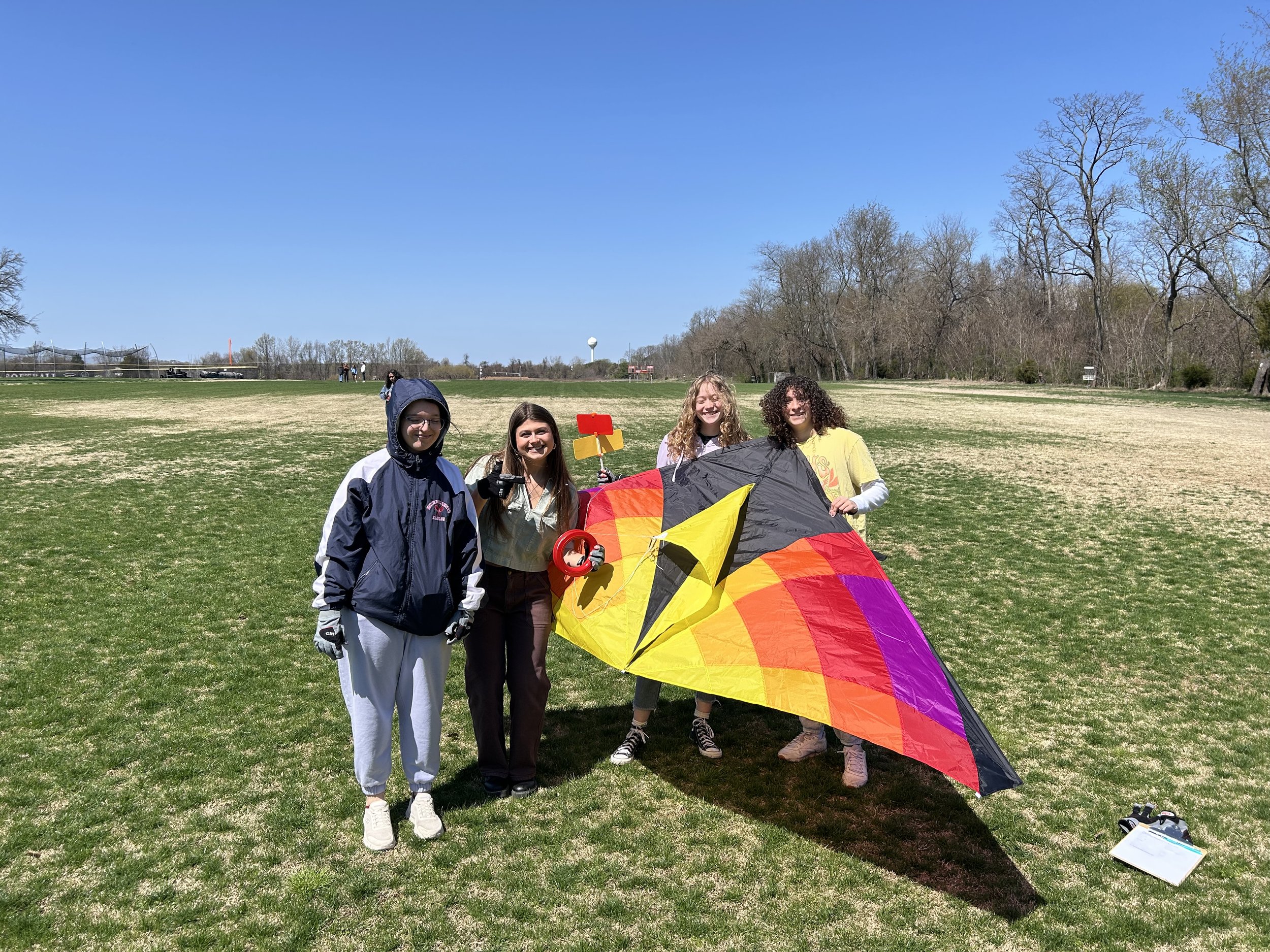
Students in ENV 141 use a kite and Kestrel to measure the lapse rate of the atmosphere.
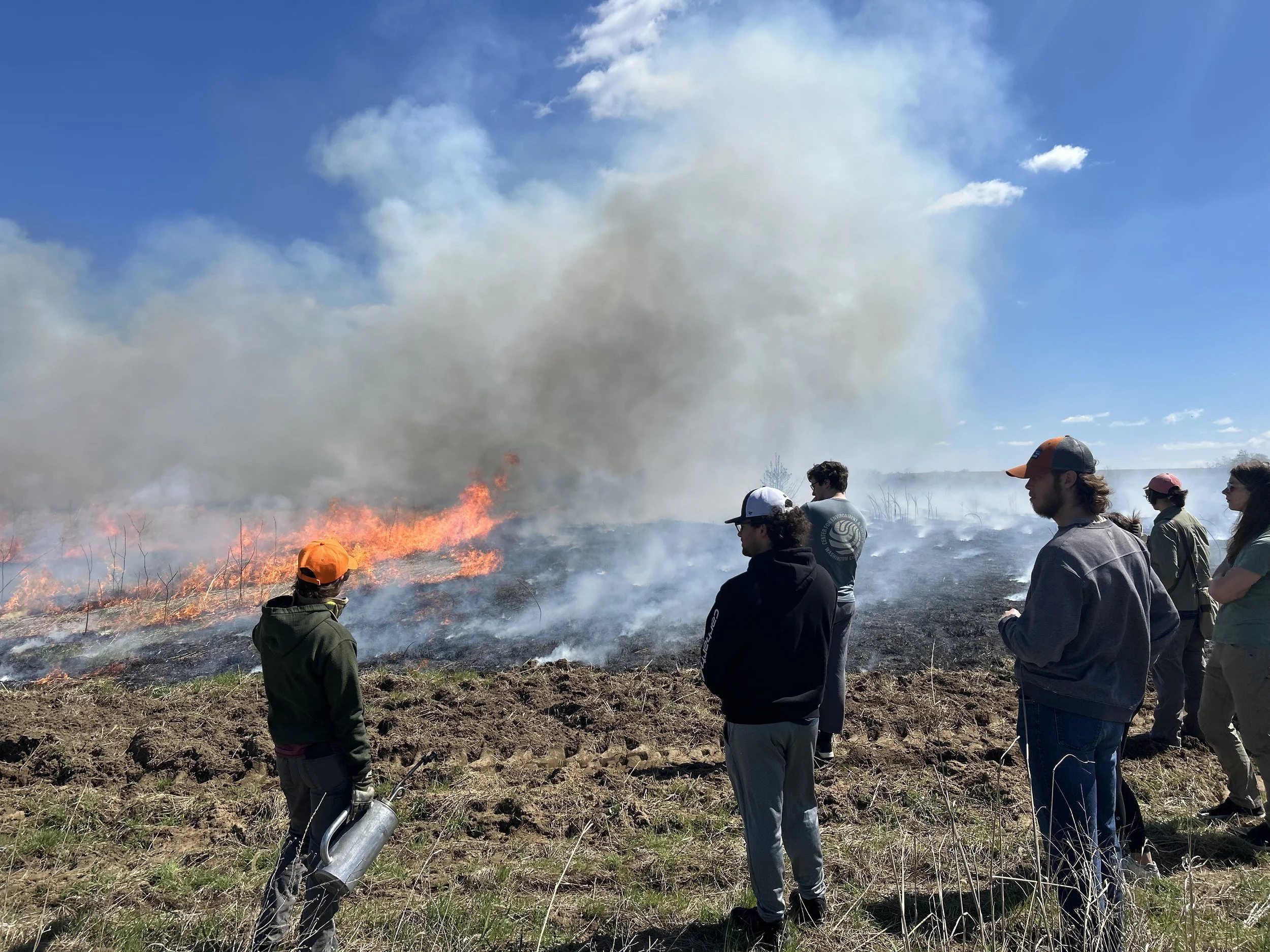
Kathy Thorton, Natural Lands Project Field Technician at CES, demonstrates a controlled burn to students in Natural Disasters.
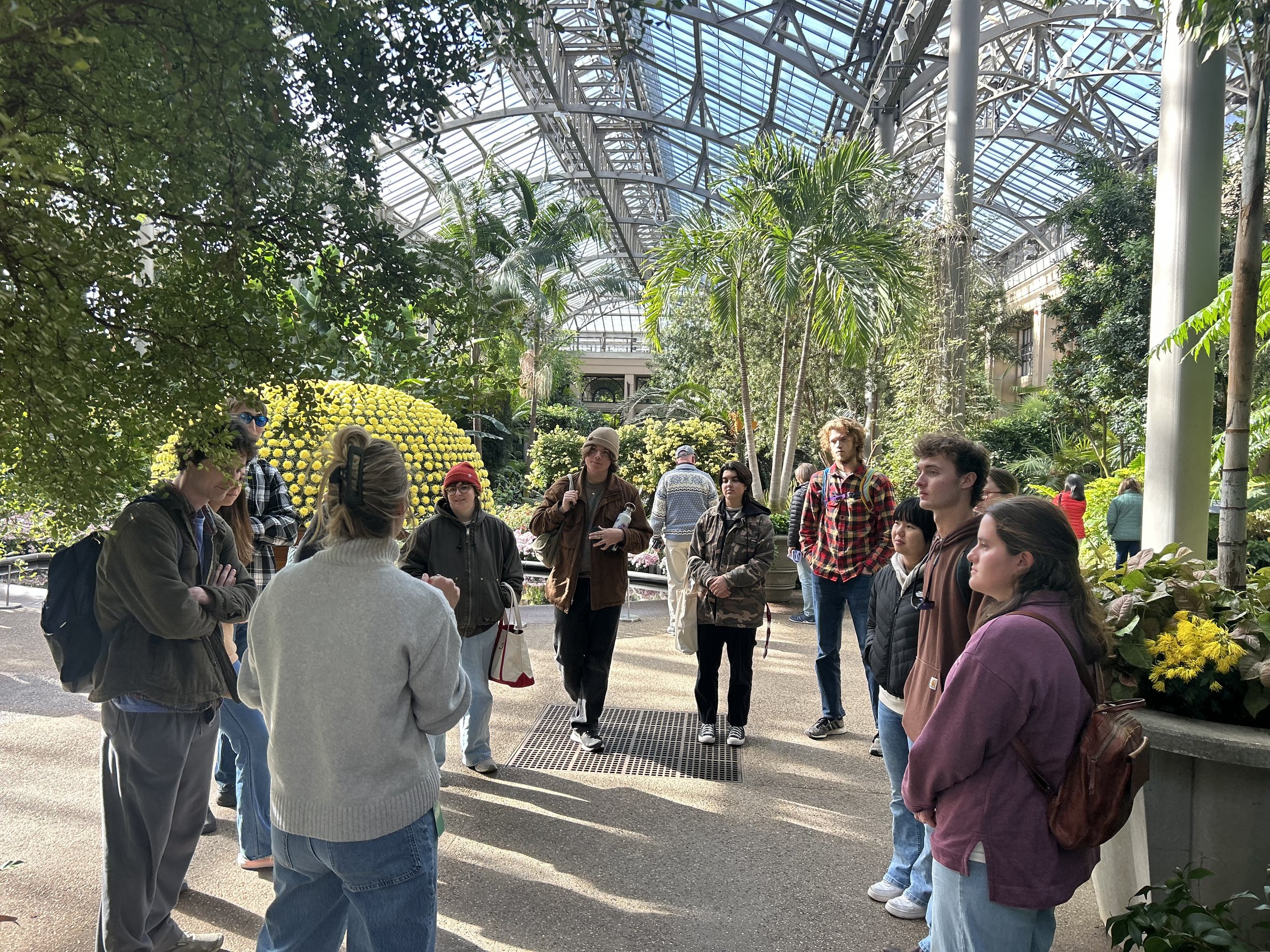
Students in Plants, People, and Society visit Longwood Gardens and learn about horticulture.
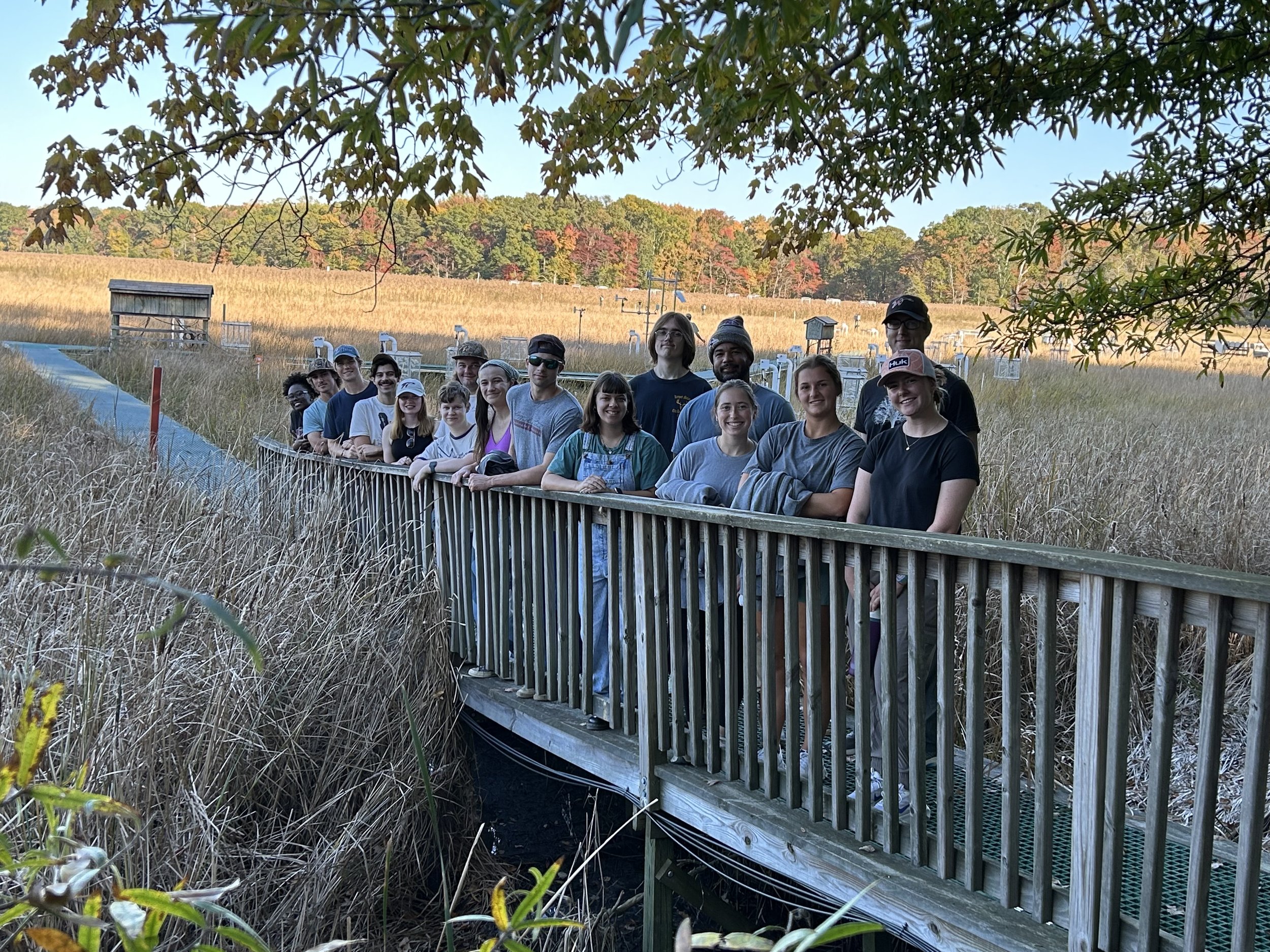
Students in ENV 320 visit the Smithsonian Environmental Research Center to learn about their futuristic climate experiments to see how well wetlands can withstand climate change.